
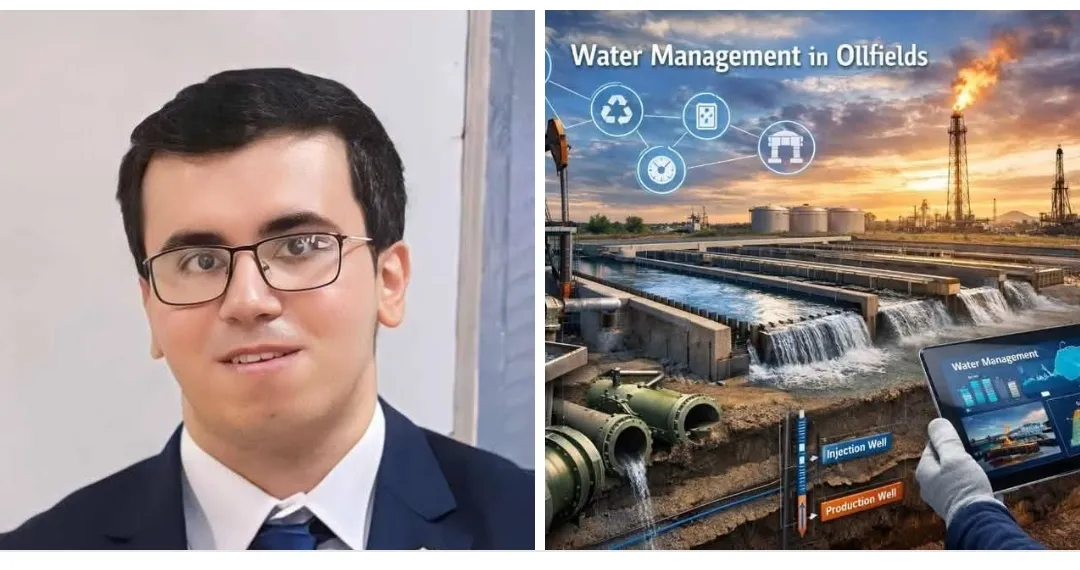
Water Management in Oilfields
Water Management in Oilfields
Written by Dr. Nabil Sameh
1. Introduction
Water management is one of the most critical aspects of oil and gas operations, influencing both technical performance and economic efficiency. Throughout the lifecycle of an oilfield—from exploration and drilling to production and abandonment—water plays a central role. It exists naturally in reservoirs, is injected to enhance recovery, and is produced alongside hydrocarbons.
Efficient water management ensures optimal reservoir performance, minimizes operational challenges, reduces environmental impact, and supports sustainability goals. As oilfields mature, water production typically increases, making its management even more complex and essential.
This article explores the theoretical foundations, challenges, and modern approaches to water management in oilfields, focusing on integrated and sustainable practices.
2. Sources of Water in Oilfields
Water encountered in oilfield operations originates from several sources, each with unique characteristics and implications:
2.1 Formation Water
Formation water is naturally present in the reservoir, occupying pore spaces along with hydrocarbons. It often contains dissolved salts, minerals, and gases, making it chemically complex.
2.2 Injection Water
Water is injected into reservoirs to maintain pressure and improve oil recovery. This includes seawater, freshwater, or treated produced water.
2.3 Produced Water
Produced water is the water that comes to the surface along with oil and gas during production. It is typically the largest waste stream in oilfield operations.
2.4 Drilling and Completion Fluids
Water-based fluids are used during drilling and completion operations, contributing to the overall water footprint of oilfield activities.
Understanding these sources is essential for designing effective water management strategies.
3. Importance of Water Management
Effective water management is crucial for multiple reasons:
3.1 Reservoir Performance Optimization
Proper handling of injected and produced water ensures pressure maintenance and improved hydrocarbon recovery.
3.2 Operational Efficiency
Uncontrolled water production can lead to issues such as corrosion, scaling, and equipment damage, reducing operational efficiency.
3.3 Cost Control
Water handling, treatment, and disposal represent significant operational costs. Efficient management reduces these expenses.
3.4 Environmental Protection
Improper water disposal can lead to soil and groundwater contamination, making environmental management a key concern.
3.5 Sustainability Goals
Modern oilfield operations aim to minimize freshwater usage and maximize water reuse, aligning with global sustainability trends.
4. Challenges in Water Management
Water management in oilfields involves several technical and operational challenges:
4.1 High Water Cut
As reservoirs mature, the proportion of water in produced fluids increases, complicating separation and processing.
4.2 Water Handling and Disposal
Large volumes of produced water require proper handling, treatment, and disposal, which can be logistically challenging.
4.3 Scaling and Corrosion
Dissolved minerals in water can precipitate, causing scaling, while chemical reactions can lead to corrosion of equipment.
4.4 Reservoir Heterogeneity
Variations in reservoir properties can lead to uneven water distribution, affecting recovery efficiency.
4.5 Limited Water Resources
In some regions, access to freshwater is limited, making water sourcing a significant challenge.
5. Water Treatment Processes
Water treatment is a key component of water management, ensuring that water is suitable for reuse or disposal.
5.1 Separation Techniques
Initial separation removes oil, gas, and solids from produced water using gravity separators and filtration systems.
5.2 Filtration
Filtration systems remove suspended particles to improve water quality.
5.3 Chemical Treatment
Chemicals are used to control scaling, corrosion, and microbial growth.
5.4 Advanced Treatment Technologies
Advanced methods include membrane filtration and adsorption processes, improving water quality for reuse.
5.5 Water Quality Control
Monitoring and maintaining water quality is essential for safe and efficient operations.
6. Water Injection Strategies
Water injection is widely used to enhance oil recovery and maintain reservoir pressure.
6.1 Pressure Maintenance
Injecting water helps maintain reservoir pressure, preventing decline in production rates.
6.2 Improved Sweep Efficiency
Water injection pushes hydrocarbons toward production wells, improving recovery.
6.3 Pattern Injection Systems
Injection wells are strategically placed to optimize fluid movement within the reservoir.
6.4 Compatibility Considerations
Injected water must be compatible with formation fluids to prevent damage.
6.5 Monitoring Injection Performance
Continuous monitoring ensures effective distribution and avoids issues such as channeling.
7. Produced Water Management
Managing produced water is one of the most significant challenges in oilfields.
7.1 Separation and Treatment
Produced water must be separated from hydrocarbons and treated before reuse or disposal.
7.2 Reuse and Recycling
Reusing treated water for injection reduces the need for freshwater.
7.3 Disposal Methods
Produced water may be disposed of through reinjection or other controlled methods.
7.4 Minimizing Environmental Impact
Proper management reduces risks to ecosystems and human health.
7.5 Integrated Water Management Systems
Combining treatment, reuse, and disposal strategies ensures efficiency.
8. Environmental Considerations
Environmental protection is a key aspect of water management.
8.1 Water Contamination Risks
Produced water may contain harmful substances that must be managed carefully.
8.2 Waste Minimization
Reducing water waste is essential for sustainable operations.
8.3 Resource Conservation
Efficient water use helps conserve natural resources.
8.4 Environmental Monitoring
Continuous monitoring ensures compliance with environmental standards.
8.5 Sustainable Practices
Adopting sustainable water management practices supports long-term industry viability.
9. Digitalization and Smart Water Management
Modern technologies are transforming water management in oilfields.
9.1 Real-Time Monitoring
Sensors and digital systems provide real-time data on water quality and flow.
9.2 Data Analytics
Analyzing water data helps optimize operations and predict issues.
9.3 Automation Systems
Automated systems improve efficiency and reduce human error.
9.4 Integrated Field Management
Combining water management with overall field operations enhances performance.
9.5 Future Trends
Digital transformation will continue to improve water efficiency and sustainability.
10. Integrated Water Management Approach
An integrated approach considers all aspects of water handling in oilfields:
Source identification and control
Treatment and reuse strategies
Injection optimization
Environmental protection
Cost efficiency
This holistic approach ensures that water is managed effectively throughout the field lifecycle.
Conclusion
Water management in oilfields is a complex and essential component of modern petroleum operations. It directly impacts reservoir performance, operational efficiency, environmental protection, and economic viability.
As oilfields mature and water production increases, the need for advanced and integrated water management strategies becomes more critical. By combining efficient treatment processes, optimized injection techniques, and sustainable practices, the industry can address the challenges associated with water handling.
Furthermore, the integration of digital technologies and smart systems offers new opportunities to enhance water management, reduce costs, and improve environmental performance.
Ultimately, effective water management is not only a technical requirement but also a strategic priority for achieving sustainable and responsible oil and gas operations
Written by Dr.Nabil Sameh
-Business Development Manager (BDM) at Nileco Company
-Certified International Petroleum Trainer
-Professor in multiple training consulting companies & academies, including Enviro Oil, ZAD Academy, and Deep Horizon , Etc.
-Lecturer at universities inside and outside Egypt
-Contributor of petroleum sector articles for Petrocraft and Petrotoday magazines, Etc.
اترك تعليقًا

آخر المقالات



اشترك في النشرة الإخبارية
احصل على آخر الأخبار في صندوق البريد الوارد الخاص بك

اشترك في النشرة الإخبارية
الأكثر مشاهدة
عرب

نماذج مشرفة

فن
أخبار مصر

المؤشرات

-
- سياسة
- أعمال
- إقتصاد
- العالم
- رياضة
- صحة
- علوم
- منوعات
- المعرض
- الصور
- الفيديو
- أزياء
- أخبار مصر
- محافظات
- مقالات
- فن
- عاجل
- حوادث
- مطبخ
- مرأة
- ثقافة
- ديني
- تعليم
- عرب
- جامعات
- طقس
- اشعار وخواطر
- بنوك
- برقيات
- شركات
- سيارات
- أدب
- أسواق
- أخبار
- حوار
- أحزاب
- نماذج مشرفة
- تقارير وتحقيقات
- قضايا
- تصريح
- العملات
- صناديق المؤشرات
- الاسهم
- العملات الرقمية
- شهادات
- السندات
- صناديق
- المؤشرات
- السلع
- التضخم
- تحليل أخبارية
- إتصل بنا
التعليقات الأخيرة