
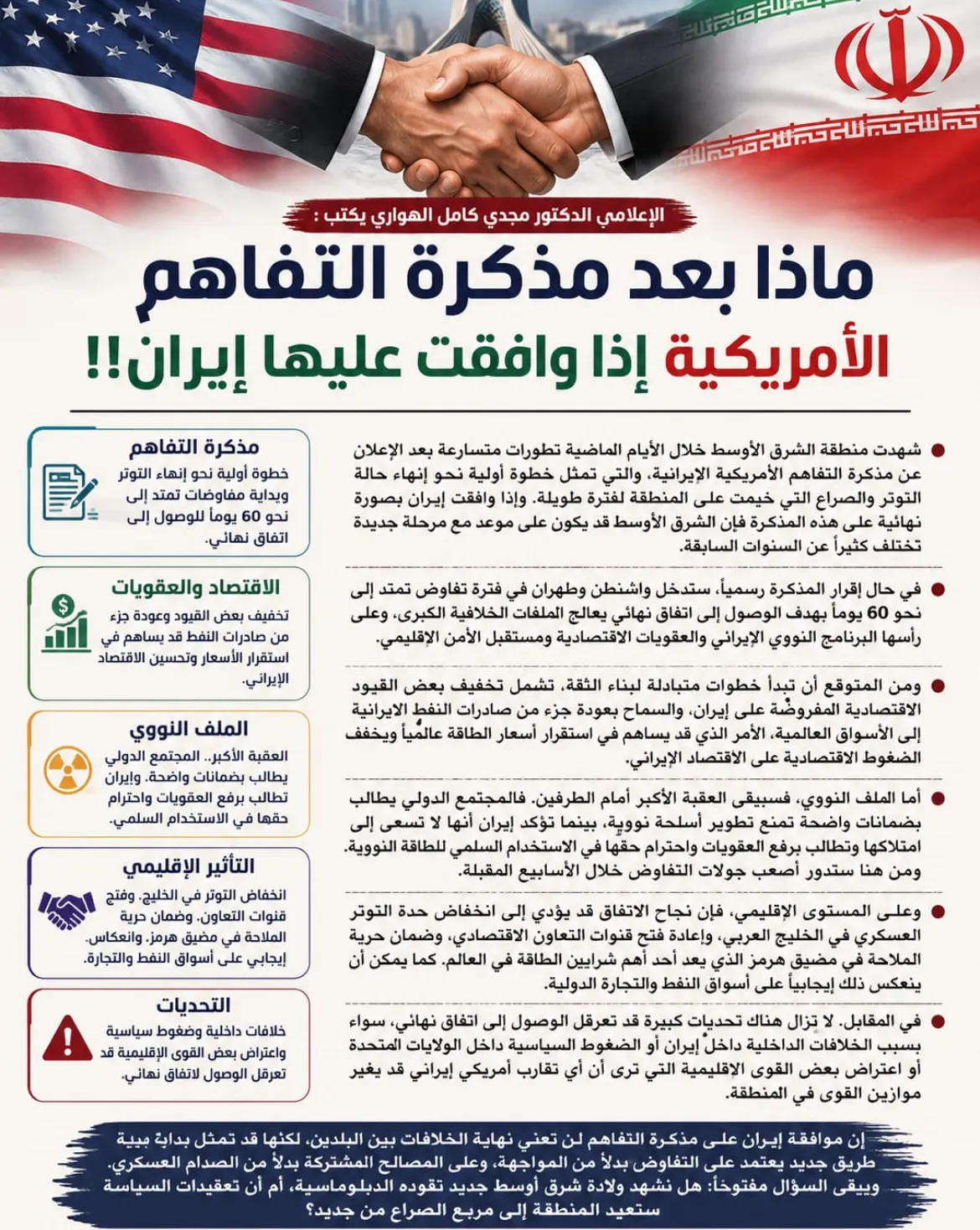
Media Journalist Dr. Magdy Kamel ElHawary Writes : "If Iran Says Yes : Will the American Memorandum Open the Door to Peace or Simply Delay a Greater Confrontation?"
The Middle East has witnessed rapid developments in recent days following the announcement of the American-Iranian Memorandum of Understanding, which represents an initial step toward ending the state of tension and conflict that has dominated the region for many years. If Iran formally approves this memorandum, the Middle East may be entering a new phase that differs significantly from previous years.
However, the most important question is not whether Iran will approve it, but rather: What will happen after the approval?
If the memorandum is officially endorsed, Washington and Tehran are expected to enter a negotiation period that could extend for approximately sixty days, aiming to reach a final agreement addressing major disputed issues, most notably Iran's nuclear program, economic sanctions, and the future of regional security.
It is also expected that both sides will take confidence-building measures, including easing certain economic restrictions imposed on Iran and allowing part of Iran's oil exports to return to global markets. Such steps could contribute to stabilizing global energy prices and reducing economic pressures on the Iranian economy.
The nuclear issue, however, will remain the greatest obstacle between the two sides. The international community seeks clear guarantees preventing the development of nuclear weapons, while Iran insists that it does not seek nuclear arms and demands the lifting of sanctions while preserving its right to peaceful nuclear energy. Consequently, the most difficult rounds of negotiations are likely to take place in the coming weeks.
At the regional level, a successful agreement could reduce military tensions in the Arabian Gulf, reopen channels of economic cooperation, and ensure freedom of navigation through the Strait of Hormuz, one of the world's most vital energy corridors. This could have a positive impact on oil markets and international trade.
On the other hand, significant challenges remain. Internal political divisions within Iran, political pressures within the United States, and objections from some regional powers that view any American-Iranian rapprochement as a shift in the regional balance of power could all hinder a final agreement.
Iran's approval of the Memorandum of Understanding would not mean the end of disagreements between the two countries. Rather, it could mark the beginning of a new path based on negotiation instead of confrontation and on shared interests instead of military conflict. The coming days will determine whether the region is heading toward lasting peace or merely a temporary truce before a new round of tensions emerges.
The question therefore remains open: Are we witnessing the birth of a new Middle East guided by diplomacy, or will the complexities of politics return the region to the cycle of conflict once again?
Media Journalist Dr. Magdy Kamel ElHawary Writes : "If Iran Says Yes : Will the American Memorandum Open the Door to Peace or Simply Delay a Greater Confrontation?"
مراجعة وصياغة الدكتور مجدي كامل الهواري
مراجعة لغوية وتحريرية وتدقيق المغيره بكري
جريدة الأضواء المصرية
اترك تعليقًا
آخر المقالات


اشترك في النشرة الإخبارية
احصل على آخر الأخبار في صندوق البريد الوارد الخاص بك

اشترك في النشرة الإخبارية
الأكثر مشاهدة
عرب

نماذج مشرفة

فن

أخبار مصر
المؤشرات

-
- سياسة
- أعمال
- إقتصاد
- العالم
- رياضة
- صحة
- علوم
- منوعات
- المعرض
- الصور
- الفيديو
- أزياء
- أخبار مصر
- محافظات
- مقالات
- فن
- عاجل
- حوادث
- مطبخ
- مرأة
- ثقافة
- ديني
- تعليم
- عرب
- جامعات
- طقس
- اشعار وخواطر
- بنوك
- برقيات
- شركات
- سيارات
- أدب
- أسواق
- أخبار
- حوار
- أحزاب
- نماذج مشرفة
- تقارير وتحقيقات
- قضايا
- تصريح
- العملات
- صناديق المؤشرات
- الاسهم
- العملات الرقمية
- شهادات
- السندات
- صناديق
- المؤشرات
- السلع
- التضخم
- تحليل أخبارية
- إتصل بنا
التعليقات الأخيرة