
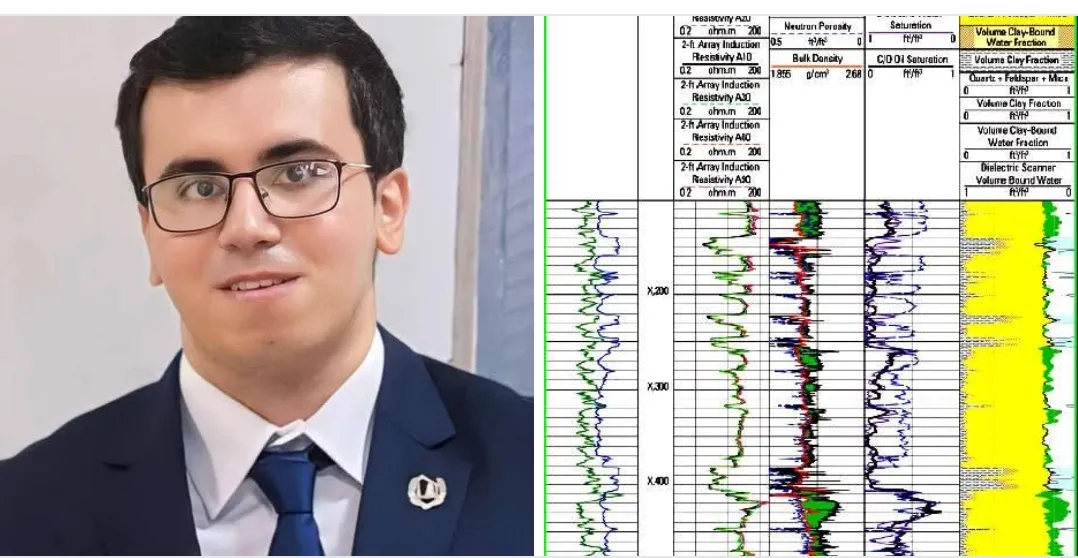
Advances in Dielectric Logging: Modern Techniques and Applications in Formation Evaluation
Written by Dr.Nabil Sameh
Advances in Dielectric Logging: Modern Techniques and Applications in Formation Evaluation
---
Abstract
Dielectric logging has emerged as a powerful tool in formation evaluation, offering enhanced sensitivity to water saturation, rock texture, and salinity. With increasing exploration in complex and low-resistivity reservoirs, modern dielectric tools provide critical information for accurate hydrocarbon assessment. This article explores the principles, technological advancements, and practical applications of dielectric logging in the petroleum industry.
---
1. Introduction to Dielectric Logging
Definition and Background:
Dielectric logging measures the complex dielectric constant of formation materials, primarily to evaluate water-filled porosity and water saturation.
Why Dielectric?
It overcomes limitations of conventional resistivity tools in low-resistivity pay zones, heavy oil, and laminated sands.
Historical Context:
Early dielectric tools were limited in frequency and vertical resolution, but modern tools (e.g., open-hole and LWD dielectric tools) are highly sophisticated.
---
2. Dielectric Properties of Reservoir Rocks
Dielectric Constant (ε):
The dielectric constant represents a material’s ability to store electrical energy in an electric field. Water has a much higher dielectric constant (~80) than hydrocarbons (~2–4) or rock matrix (~5–8).
Frequency Dependence:
Dielectric response varies with frequency. High frequencies (~GHz range) are more sensitive to bound water and thin laminations.
Electrical Polarization Mechanisms:
Includes orientation polarization (dipolar molecules), interfacial polarization, and space charge effects—each impacting the signal at different frequencies.
---
3. Working Principle of Dielectric Logging Tools
Tool Configuration:
Typically consists of transmitter and receiver antennas in pad-mounted or button-type arrays.
Measurement Modes:
Tools measure both dielectric constant and conductivity at multiple frequencies. The most advanced tools provide radial and vertical resolution.
Depth of Investigation (DOI):
Varies from a few millimeters to several centimeters—offering high-resolution data, ideal for thin beds and invasion analysis.
Types of Tools:
Schlumberger’s Dielectric Scanner
Halliburton’s MRIL-WD
Baker Hughes’ MR Scanner
---
4. Advances in Dielectric Logging Technology
Multifrequency Measurement:
Modern tools operate at multiple frequencies (100 MHz–2 GHz) to resolve both free and bound water.
Azimuthal Resolution and Imaging:
Advanced dielectric tools can provide azimuthal resistivity and permittivity profiles, enabling dip estimation and bed boundary detection.
Vertical and Horizontal Component Analysis:
Improves anisotropy assessment in laminated formations.
Integration with Other Logs:
Dielectric logs are often combined with NMR, resistivity, and nuclear logs for comprehensive petrophysical evaluation.
Real-Time LWD Dielectric Logging:
Logging-while-drilling dielectric tools allow formation evaluation in real-time, reducing rig time and risk.
---
5. Applications in Reservoir Evaluation
Water Saturation Estimation:
Dielectric logging can separate bound and free water, crucial in tight gas sands and shale gas.
Evaluation in Low-Resistivity Pay (LRP):
Identifies hydrocarbon-bearing zones that conventional resistivity logs miss, especially in conductive mud or high-salinity environments.
Heavy Oil Reservoirs:
In thermal and heavy oil operations, dielectric tools differentiate between water, oil, and clay-bound water.
Thin Bed Resolution:
Essential in evaluating pay thickness in laminated sands, where standard resistivity tools suffer from vertical resolution limits.
Salinity and Formation Water Analysis:
Dielectric constant varies with brine salinity, making it useful in estimating water salinity in complex zones.
---
6. Challenges and Limitations
Tool Calibration:
Requires accurate calibration for temperature, mud type, and tool positioning to avoid measurement errors.
Environmental Sensitivity:
Highly sensitive to borehole environment (e.g., invasion, mudcake, borehole rugosity), requiring corrections.
Depth of Investigation Limitation:
Dielectric tools generally offer shallow DOI, which may not represent deeper formation properties in invaded zones.
Complex Interpretation Models:
Requires robust petrophysical models and integration with lab measurements or core data.
---
7. Future Outlook
Dielectric Imaging Tools:
Emerging high-resolution imaging tools for complex reservoir architecture.
AI and Machine Learning Integration:
Enhanced interpretation accuracy through pattern recognition, multi-log integration, and automated lithology classification.
Nano-Sensors and MEMS Technology:
Development of miniature dielectric sensors could enable wireline-free, permanent monitoring systems.
Hybrid Tools:
Combining dielectric with NMR, EM, and nuclear sensors in a single tool string for real-time comprehensive analysis.
---
8. Conclusion
Dielectric logging has matured into a vital tool for reservoir characterization, especially in complex environments where traditional logs fall short. With advances in multifrequency acquisition, imaging capabilities, and AI-assisted interpretation, dielectric logging continues to enhance formation evaluation, reduce uncertainties, and guide reservoir management decisions.
Written by Dr.Nabil Sameh
- Business Development Manager at Nileco Company
-Certified International Petroleum Trainer
- professor in many Training consulting companies and academies like Enviro oil, ZAD Academy, Deep Horizon & others
-Contributing articles on the petroleum sector for Petroctaft and PetroToday magazines
اترك تعليقًا

آخر المقالات




اشترك في النشرة الإخبارية
احصل على آخر الأخبار في صندوق البريد الوارد الخاص بك

اشترك في النشرة الإخبارية
الأكثر مشاهدة
عرب

نماذج مشرفة

فن

أخبار مصر

المؤشرات

-
- سياسة
- أعمال
- إقتصاد
- العالم
- رياضة
- صحة
- علوم
- منوعات
- المعرض
- الصور
- الفيديو
- أزياء
- أخبار مصر
- محافظات
- مقالات
- فن
- عاجل
- حوادث
- مطبخ
- مرأة
- ثقافة
- ديني
- تعليم
- عرب
- جامعات
- طقس
- اشعار وخواطر
- بنوك
- برقيات
- شركات
- سيارات
- أدب
- أسواق
- أخبار
- حوار
- أحزاب
- نماذج مشرفة
- تقارير وتحقيقات
- قضايا
- تصريح
- العملات
- صناديق المؤشرات
- الاسهم
- العملات الرقمية
- شهادات
- السندات
- صناديق
- المؤشرات
- السلع
- التضخم
- تحليل أخبارية
- إتصل بنا
التعليقات الأخيرة