
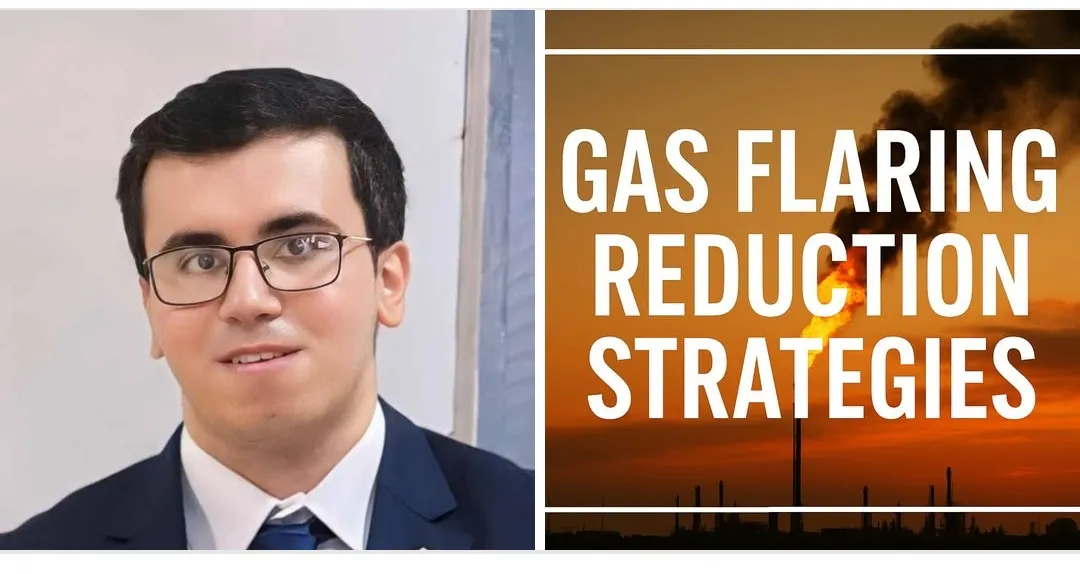
Gas Flaring Reduction Strategies
Gas Flaring Reduction Strategies
Written by Dr. Nabil Sameh
---
1. Introduction
Gas flaring represents one of the most persistent environmental and operational challenges in the oil and gas industry. It involves the controlled burning of natural gas associated with crude oil production when there is no immediate use or transport infrastructure for the gas. Although initially considered a safety or pressure-relief measure, continuous and large-scale flaring has become a significant contributor to greenhouse-gas emissions, resource wastage, and environmental degradation.
Globally, billions of cubic meters of natural gas are flared annually, resulting in the loss of valuable energy and economic opportunities. The practice also emits carbon dioxide, methane, black carbon, and other pollutants that exacerbate climate change and air-quality deterioration. Consequently, the modern petroleum industry prioritizes flaring reduction as a key sustainability objective.
This article presents the theoretical framework of gas-flaring reduction strategies, exploring technological, operational, and management approaches to minimize routine flaring while maintaining production efficiency and safety.
---
2. Understanding the Causes of Gas Flaring
The phenomenon of gas flaring arises mainly due to the lack of infrastructure for gas capture, processing, and transportation. In many oilfields, especially in remote or offshore areas, associated gas is considered a by-product that cannot be economically utilized. Other common causes include:
Operational limitations, such as inadequate compression or gathering systems.
Processing constraints, where gas-treatment plants cannot handle variable flow rates or impurities.
Production start-up or testing phases, when gas volumes are unstable or contaminated with liquids.
Safety considerations, where flaring provides pressure relief in emergencies.
Recognizing these causes is essential before formulating reduction strategies, as the chosen methods must align with the operational realities of the field.
---
3. Technological Approaches to Flaring Reduction
Technological innovation has been the foundation for minimizing gas flaring. The petroleum industry now integrates several methods and technologies that allow the recovery, reinjection, or utilization of associated gas.
3.1 Gas Reinjection
Gas reinjection involves compressing and injecting the produced gas back into the reservoir. The primary objective is to maintain reservoir pressure and enhance oil recovery. From a flaring-reduction standpoint, this approach converts what would otherwise be waste into a mechanism for improved production. It is particularly effective in mature reservoirs or where the gas has high content of hydrogen sulfide or carbon dioxide that complicates its use.
3.2 Gas Utilization for Power Generation
Using associated gas to generate electricity onsite represents another highly effective method. Gas-fueled turbines or engines can supply power for field operations, eliminating the need for diesel generators and reducing emissions. Surplus power can be exported to local grids, creating socioeconomic benefits for surrounding communities.
3.3 Gas Conversion Technologies
When infrastructure permits, gas-to-liquids (GTL) or gas-to-methanol technologies can transform flared gas into valuable products such as synthetic diesel, naphtha, or chemical feedstocks. Although capital intensive, these technologies align with long-term sustainability goals and are suitable for fields with stable production rates.
3.4 Gas Gathering and Compression Systems
Modern fields rely on integrated gas-gathering networks that collect and transport associated gas to processing plants. Installing modular compression units allows the capture of gas even from small or scattered wells. Such systems require robust design and maintenance but remain the most practical solution for reducing routine flaring in onshore operations.
---
4. Operational and Process-Control Strategies
Beyond technology, efficient operational management plays a decisive role in minimizing flaring volumes.
4.1 Process Optimization
Process optimization involves continuous monitoring of separators, compressors, and control valves to prevent gas leaks and unplanned releases. Advanced process-control systems help stabilize production and reduce the need for emergency flaring during upsets or maintenance.
4.2 Improved Maintenance Practices
Poorly maintained equipment such as seals, valves, and compressors often leads to unintended gas discharges. Adopting preventive-maintenance programs ensures the integrity of the gas-handling system, limiting fugitive emissions and minimizing downtime that could result in flaring.
4.3 Start-up and Shutdown Management
Significant flaring occurs during plant start-ups, shutdowns, and well-testing periods. Implementing gradual pressure-ramp procedures, gas-recycling loops, and vapor-recovery units can dramatically reduce emissions during these transient phases.
4.4 Real-Time Monitoring and Automation
Digital instrumentation and real-time monitoring platforms are becoming central to flaring control. Automated flow-meters and control valves allow operators to detect irregularities instantly and respond proactively before excess gas is diverted to the flare.
---
5. Managerial and Strategic Dimensions
The success of flaring reduction initiatives depends equally on managerial commitment and integrated planning.
5.1 Strategic Planning and Field Design
At the field-development stage, incorporating gas-handling facilities and flare-gas recovery systems into the initial design minimizes later retrofitting costs. Strategic alignment between exploration, production, and gas-marketing divisions ensures that associated gas is treated as a valuable commodity rather than a waste stream.
5.2 Corporate Sustainability Integration
Many international operators now embed flaring-reduction targets within their sustainability frameworks. This creates accountability and drives investment in low-emission technologies. Transparent reporting and benchmarking of flaring intensity encourage continuous improvement across the industry.
5.3 Capacity Building and Training
Developing local technical capacity is vital for long-term success. Operators must train engineers and technicians in flare-system operation, process optimization, and gas-utilization technologies. Knowledge transfer ensures that the systems installed are operated efficiently and safely.
5.4 Stakeholder Engagement
Although this article focuses on theory rather than policy, it is important to acknowledge that collaboration with local communities, energy partners, and environmental institutions often determines the sustainability of flaring-reduction programs. Effective communication helps align economic and environmental priorities.
---
6. Emerging Trends and Future Outlook
The global movement toward decarbonization is transforming how petroleum companies address gas flaring. Several emerging trends are reshaping future strategies:
Digital Flaring Management Systems: Integration of IoT sensors and artificial intelligence to optimize combustion efficiency and detect anomalies.
Micro-LNG and Mini-GTL Plants: Small-scale facilities that convert stranded gas into liquefied or synthetic fuels for regional markets.
Hybrid Renewable Integration: Using surplus associated gas with solar or wind systems to provide continuous power generation.
Carbon Capture Integration: Capturing CO₂ from flare systems for storage or reuse, transforming emission sources into low-carbon opportunities.
Flaring-Free Field Design: Conceptual design frameworks where no routine flaring is permitted; all gas is either utilized, reinjected, or stored.
These innovations indicate that flaring reduction is evolving from a compliance obligation into a technological frontier of energy transition.
---
7. Environmental and Economic Implications
Reducing gas flaring offers dual environmental and economic advantages. Environmentally, it contributes to greenhouse-gas mitigation, improved air quality, and reduced noise and light pollution around production sites. Economically, captured gas provides a supplemental energy resource, generating revenue and lowering fuel costs for operations.
Furthermore, companies that successfully reduce flaring improve their environmental, social, and governance (ESG) performance, which increasingly influences investment decisions. From a theoretical standpoint, the concept of “zero routine flaring” aligns the petroleum industry with sustainable-development principles and the global push toward cleaner energy systems.
---
8. Conclusion
Gas flaring reduction is not a single-step process but a multidimensional strategy combining technological, operational, and managerial measures. The theoretical understanding emphasizes that success depends on early planning, integrated gas-handling infrastructure, efficient process control, and continuous innovation.
By converting associated gas into a usable resource—through reinjection, power generation, or conversion technologies—operators achieve both environmental protection and enhanced production efficiency. The evolution of digital control systems and small-scale gas-utilization technologies further strengthens this trend, ensuring that flaring becomes an exception rather than a routine practice.
Ultimately, the transition toward minimal or zero flaring defines the next stage of responsible petroleum production. It exemplifies how engineering excellence and environmental stewardship can coexist, paving the way for a more sustainable energy future.
Written by Dr.Nabil Sameh
-Business Development Manager at Nileco Company
-Certified International Petroleum Trainer
-Professor in multiple training consulting companies & academies, including Enviro Oil, ZAD Academy, and Deep Horizon
-Lecturer at universities inside and outside Egypt
-Contributor of petroleum sector articles for Petrocraft and Petrotoday magazines
اترك تعليقًا

آخر المقالات




اشترك في النشرة الإخبارية
احصل على آخر الأخبار في صندوق البريد الوارد الخاص بك

اشترك في النشرة الإخبارية
الأكثر مشاهدة
عرب

نماذج مشرفة

فن

أخبار مصر

المؤشرات

-
- سياسة
- أعمال
- إقتصاد
- العالم
- رياضة
- صحة
- علوم
- منوعات
- المعرض
- الصور
- الفيديو
- أزياء
- أخبار مصر
- محافظات
- مقالات
- فن
- عاجل
- حوادث
- مطبخ
- مرأة
- ثقافة
- ديني
- تعليم
- عرب
- جامعات
- طقس
- اشعار وخواطر
- بنوك
- برقيات
- شركات
- سيارات
- أدب
- أسواق
- أخبار
- حوار
- أحزاب
- نماذج مشرفة
- تقارير وتحقيقات
- قضايا
- تصريح
- العملات
- صناديق المؤشرات
- الاسهم
- العملات الرقمية
- شهادات
- السندات
- صناديق
- المؤشرات
- السلع
- التضخم
- تحليل أخبارية
- إتصل بنا
التعليقات الأخيرة