
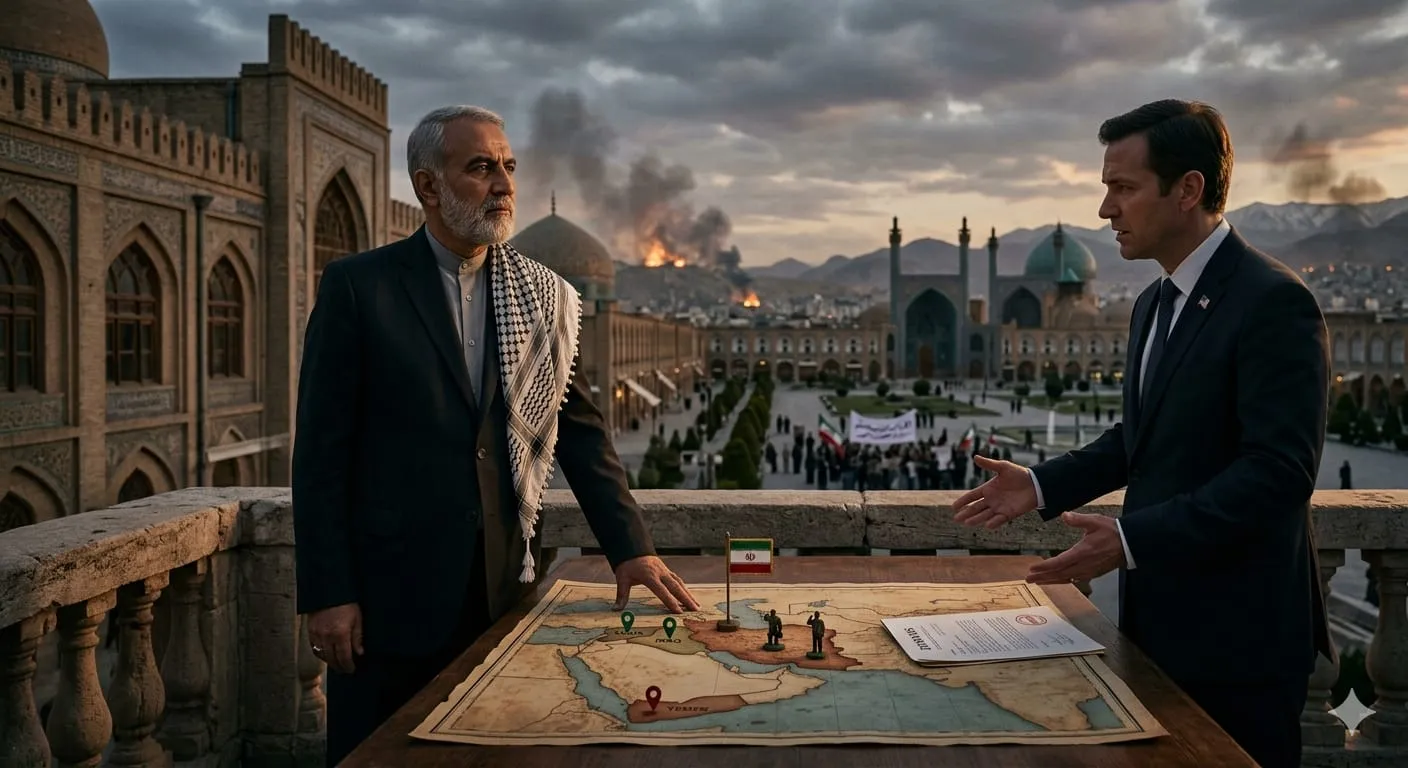
: Dr. Magdy Kamel El-Hawary Writes : What Does Iran Want from the War? And Why Did It Reject the American Conditions?
In a world that no longer recognizes balance, where wars are no longer merely conventional military confrontations, Iran now stands at the center of a complex global scene—one where interests collide and major powers clash.
But the most pressing question remains:
What does Iran truly want from this war? And why does it insist on rejecting American conditions despite unprecedented pressure?
First: War for Iran… Not a Choice, but a Tool
Iran does not view war as an end in itself, but rather as a means to reshape the balance of power in the region.
For years, Tehran has sought to establish itself as an undeniable regional force—not only militarily, but politically and ideologically.
For Iran, war serves multiple purposes:
Imposing new realities on the ground
Expanding influence across the Middle East
Testing its adversaries, particularly the United States and Israel
Sending a clear message: “Iran is not a state that can be subdued”
Second: Why Did Iran Reject the American Conditions?
The Iranian rejection was not surprising—it was expected given the nature of the conflict.
According to various analyses, the American conditions included:
Scaling back Iran’s nuclear program
Halting support for regional allies
Limiting the development of ballistic missiles
Here lies the core issue…
Iran perceives these demands as: A complete dismantling of its tools of power
From Tehran’s perspective:
The nuclear program = a strategic deterrent
Missiles = military balance against Israeli superiority
Regional allies = strategic depth preventing isolation
Accepting such terms would amount to a form of undeclared political surrender.
Third: A Clash of Wills, Not Negotiations
What we are witnessing is not a traditional negotiation process, but a battle of wills.
The United States seeks to:
Contain Iran
Protect its interests in the Gulf
Guarantee Israel’s security
Meanwhile, Iran aims to:
Be recognized as a dominant regional power
Lift sanctions without making fundamental concessions
Establish a mutual deterrence equation
Fourth: Iran’s Message to the World
Iran is not only addressing Washington—it is sending messages on multiple fronts:
To Gulf states: “We are part of the equation, whether you accept it or not”
To its allies: “We will not retreat”
To its domestic audience: “We are resisting dominance”
Tehran understands that any retreat now could be interpreted as weakness—something that may threaten internal stability.
Fifth: Where Is This Heading?
We are facing three possible scenarios:
Full-scale escalation
A direct confrontation that could extend beyond the region
A prolonged proxy war
Draining all parties without a decisive outcome
A temporary settlement
Leaving the roots of conflict unresolved
What is certain, however, is that what is happening today is not a passing crisis…
It is a redrawing of the balance of power in the Middle East.
Conclusion
Iran does not seek war for its own sake… but it will not avoid it if it becomes the price of preserving its influence.
Nor does it reject American conditions arbitrarily… but because it views them as the end of its regional role.
Between Washington’s desire to contain, and Tehran’s determination to expand, the Middle East remains suspended on the edge of an explosion—one that could change everything… or reproduce the same conflict in a more complex form.
اترك تعليقًا
آخر المقالات



اشترك في النشرة الإخبارية
احصل على آخر الأخبار في صندوق البريد الوارد الخاص بك

اشترك في النشرة الإخبارية
الأكثر مشاهدة
عرب

نماذج مشرفة

فن

أخبار مصر

المؤشرات

-
- سياسة
- أعمال
- إقتصاد
- العالم
- رياضة
- صحة
- علوم
- منوعات
- المعرض
- الصور
- الفيديو
- أزياء
- أخبار مصر
- محافظات
- مقالات
- فن
- عاجل
- حوادث
- مطبخ
- مرأة
- ثقافة
- ديني
- تعليم
- عرب
- جامعات
- طقس
- اشعار وخواطر
- بنوك
- برقيات
- شركات
- سيارات
- أدب
- أسواق
- أخبار
- حوار
- أحزاب
- نماذج مشرفة
- تقارير وتحقيقات
- قضايا
- تصريح
- العملات
- صناديق المؤشرات
- الاسهم
- العملات الرقمية
- شهادات
- السندات
- صناديق
- المؤشرات
- السلع
- التضخم
- تحليل أخبارية
- إتصل بنا
التعليقات الأخيرة