
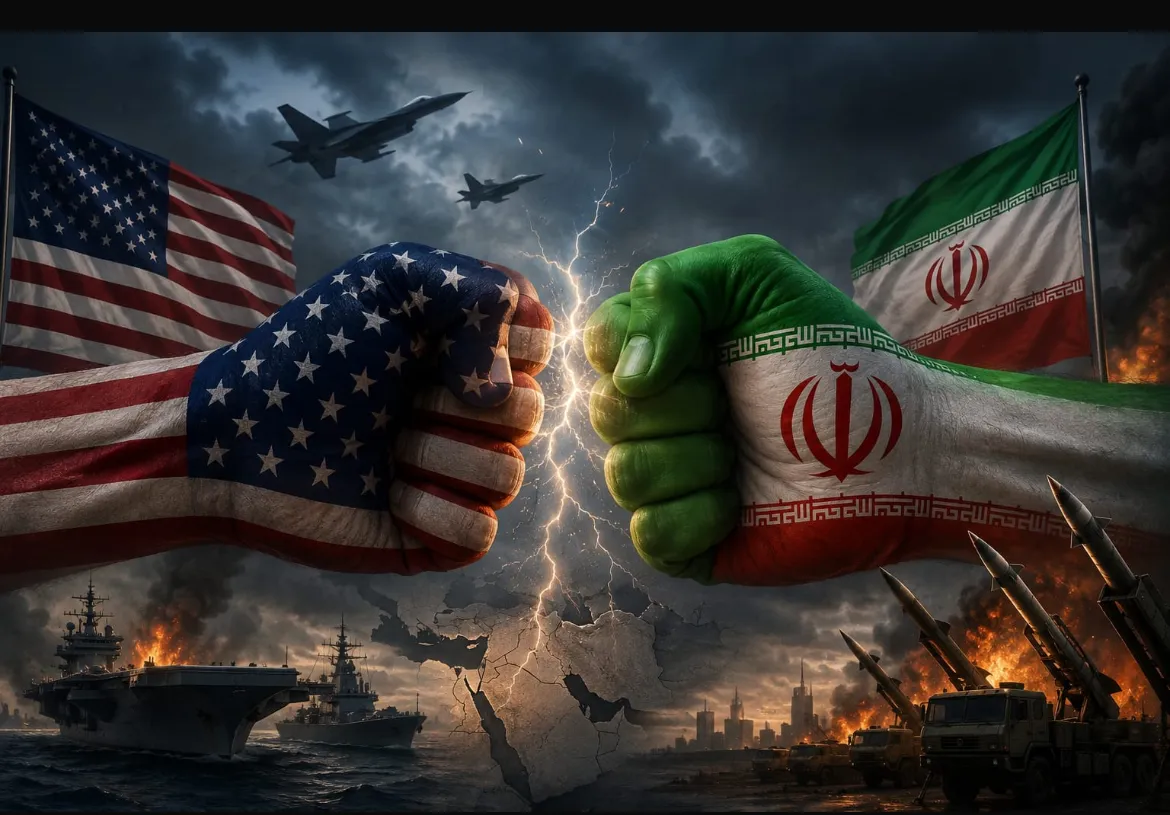
Media Personality Dr. Magdy Kamel ElHawary Writes : What Is the Fate of the War Between America and Iran Now?
The Middle East is living through one of its most dangerous political and military moments in years, as tensions between the United States and Iran continue to escalate in a way that threatens to ignite a conflict whose consequences could impact the entire world. Amid military threats, naval movements, and coded political messages, the world watches anxiously: Has the major war become imminent, or is this merely another display of power?
In reality, the conflict between Washington and Tehran did not begin today. It dates back to the Iranian Revolution of 1979, but in recent years it has entered a far more sensitive and complex phase, especially with Iran’s growing influence in the region and the return of the Iranian nuclear issue to the forefront once again.
The United States believes that Iran now possesses extensive military and political influence across the Middle East, whether through its allies or through its missile and technological capabilities. Iran, meanwhile, sees Washington as attempting to economically and politically suffocate it in an effort to overthrow its regime by any means possible.
But the most important question now is:
Will a full-scale war actually erupt?
Many military analysts believe that an all-out war is not the preferred option for either side, because the consequences would be disastrous for الجميع. America understands that any direct confrontation with Iran would neither be easy nor quick, especially since Iran possesses significant missile capabilities and networks of influence extending across multiple countries in the region.
On the other hand, Iran realizes that entering an open war with the world’s largest military power could result in massive economic and military destruction within the country and may even threaten the stability of the regime itself.
Therefore, the most likely scenario at the moment appears to be the continuation of a “war of indirect attrition” through economic pressure, limited attacks, and exchanged military messages, without reaching a comprehensive military confrontation.
However, the greatest danger remains that a single small mistake could ignite the entire region. A stray missile, a miscalculated attack, or a hasty political decision by either side could transform the current tension into a real war within hours.
As always, the Arab peoples would pay the highest price. Every new escalation means rising oil prices, disruption of air travel, economic and tourism instability, and growing fear and uncertainty across the region.
Today, the world does not only fear a war between America and Iran; it fears the explosion of the entire Middle East, especially amid the presence of many international and regional powers with direct interests in this conflict.
And the question occupying everyone’s mind remains:
Will diplomacy succeed in containing the crisis?
Or is the world truly standing at the gates of a confrontation that could reshape the region for many years to come?
اترك تعليقًا
آخر المقالات



اشترك في النشرة الإخبارية
احصل على آخر الأخبار في صندوق البريد الوارد الخاص بك

اشترك في النشرة الإخبارية
الأكثر مشاهدة
عرب

نماذج مشرفة

فن

أخبار مصر
المؤشرات

-
- سياسة
- أعمال
- إقتصاد
- العالم
- رياضة
- صحة
- علوم
- منوعات
- المعرض
- الصور
- الفيديو
- أزياء
- أخبار مصر
- محافظات
- مقالات
- فن
- عاجل
- حوادث
- مطبخ
- مرأة
- ثقافة
- ديني
- تعليم
- عرب
- جامعات
- طقس
- اشعار وخواطر
- بنوك
- برقيات
- شركات
- سيارات
- أدب
- أسواق
- أخبار
- حوار
- أحزاب
- نماذج مشرفة
- تقارير وتحقيقات
- قضايا
- تصريح
- العملات
- صناديق المؤشرات
- الاسهم
- العملات الرقمية
- شهادات
- السندات
- صناديق
- المؤشرات
- السلع
- التضخم
- تحليل أخبارية
- إتصل بنا
التعليقات الأخيرة