
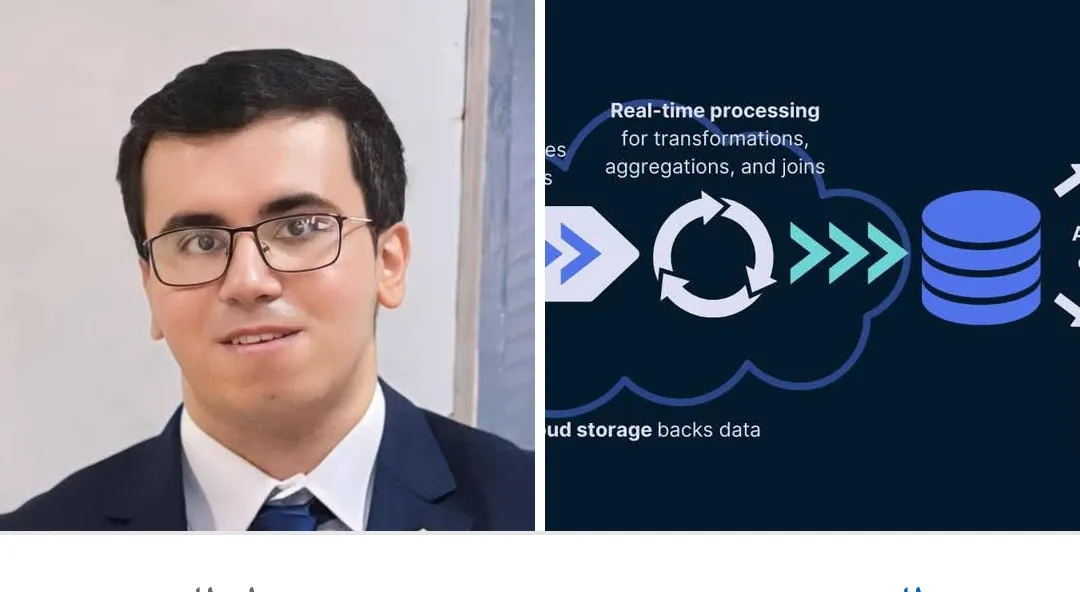
Real-Time PVT Property Prediction from Streaming Data
Real-Time PVT Property Prediction from Streaming Data
Written by Dr. Nabil Sameh
1. Introduction
Pressure–Volume–Temperature (PVT) properties form the cornerstone of petroleum reservoir and production engineering. They define the thermodynamic behavior of reservoir fluids—governing flow in the porous media, wellbore, and surface facilities. Traditionally, PVT properties are determined through laboratory experiments or empirical correlations derived from static datasets. While these methods have served the industry for decades, they are inherently limited by their time delay, cost, and inability to represent real-time reservoir dynamics.
In modern digital oilfield operations, continuous data streams flow from sensors installed across wells, pipelines, and surface facilities. These data streams, when properly harnessed, provide a live reflection of reservoir conditions. Leveraging real-time streaming data for PVT property prediction represents a transformative shift from periodic, static analysis toward continuous, dynamic understanding. The result is a living model of fluid behavior that evolves with operational and geological changes, providing engineers with immediate insights for decision-making.
This article discusses the theoretical framework for predicting PVT properties—such as formation volume factor, bubble point, gas-oil ratio, and viscosity—in real time using streaming data. It also explores how artificial intelligence, data assimilation, and edge analytics can be integrated into the workflow to enable adaptive and autonomous reservoir management.
2. The Evolution of PVT Characterization
Historically, PVT characterization depended heavily on laboratory measurements. Samples collected from reservoir or separator conditions were analyzed using specialized cells under controlled temperature and pressure to determine properties such as solution gas–oil ratio and formation volume factor. Though accurate, these tests required significant time, and the resulting models represented only snapshots of reservoir conditions.
As reservoirs matured and production dynamics became more complex, engineers began using empirical correlations to fill the data gaps. These correlations, however, were often region-specific and lacked flexibility for unconventional or evolving reservoir systems. With the emergence of digital transformation in petroleum engineering, continuous downhole measurements—pressure, temperature, flow rates, and composition indicators—have become available.
By integrating these measurements into dynamic models, PVT behavior can now be estimated in real time. The transition from static lab-derived curves to continuously updated, data-driven predictions marks a paradigm shift in how PVT analysis supports field operations.
3. Conceptual Framework of Real-Time PVT Prediction
Real-time PVT prediction relies on a synergy between continuous data acquisition, automated data processing, and adaptive predictive modeling. Conceptually, the workflow can be divided into four interconnected layers:
• Data Acquisition Layer:
This layer involves the collection of live operational data from downhole gauges, multiphase flow meters, and surface sensors. The data typically include temperature, pressure, flow composition proxies, and real-time measurements of produced fluid ratios.
• Data Preprocessing Layer:
The raw sensor data must be filtered, normalized, and synchronized before use. Noise reduction algorithms, missing data interpolation, and data validation protocols ensure the integrity and consistency of the input stream.
• Predictive Modeling Layer:
At the heart of real-time PVT prediction lies the model engine—often a hybrid of data-driven machine learning models and physical reservoir simulators. The model continuously updates its parameters based on new data, adapting to changes in reservoir and surface conditions.
• Decision & Visualization Layer:
The final layer transforms the continuously updated predictions into actionable insights. Engineers can visualize trends, identify anomalies, and adjust production strategies without waiting for delayed laboratory results.
This architecture creates a closed-loop system where predictions are constantly refined through feedback, ensuring alignment with the evolving reservoir reality.
4. Theoretical Basis for Data-Driven PVT Modeling
The foundation of real-time prediction lies in recognizing that PVT behavior can be represented as a function of observable state variables. When pressure, temperature, and compositional indicators are continuously measured, machine learning models can approximate complex thermodynamic relationships implicitly.
From a theoretical perspective, these models act as high-dimensional mappings between observable operational parameters and hidden thermodynamic states. They learn the nonlinear dependencies that define how fluid properties evolve with environmental changes.
Data-driven models can be categorized into two broad types:
• Static Learners: Trained on historical datasets to provide a baseline understanding of fluid properties.
• Dynamic Learners: Continuously updated with streaming data, capable of adjusting to time-dependent variations such as gas liberation, compositional changes, or water encroachment.
A real-time system typically employs the latter, embedding adaptive algorithms that recalibrate the model as new data arrive. These adaptive learning processes enable continuous refinement without interrupting production, effectively turning the reservoir into a “living laboratory.”
5. Integration with Digital Oilfield Infrastructure
To operationalize real-time PVT prediction, integration within the broader digital oilfield ecosystem is essential. The infrastructure must combine data acquisition systems, communication networks, and edge computing capabilities.
Edge and Cloud Integration
At the wellsite, edge devices perform rapid computations, filtering and analyzing raw data before transmitting results to central cloud platforms. This distributed approach reduces latency and ensures that decisions—such as adjusting choke size or injection rates—can be made instantly.
Data Lakes and AI Pipelines
All streaming data are stored in structured data lakes that serve as repositories for continuous model training. The AI pipeline processes this data, retraining the prediction models to reflect new operational realities.
Interoperability and Standardization
For real-time PVT prediction to function seamlessly, interoperability between data sources, analytics platforms, and visualization tools is crucial. Standardized communication protocols, such as OPC-UA and MQTT, facilitate the secure and reliable transfer of data across systems.
The integration of these technological layers transforms conventional PVT interpretation into a continuously evolving digital service.
6. Adaptive Learning and Feedback Mechanisms
The central theoretical advantage of real-time PVT modeling lies in its feedback-driven learning mechanism. In contrast to fixed empirical correlations, adaptive models evolve dynamically, improving their predictive accuracy as new patterns emerge.
The feedback mechanism involves three stages:
• Continuous Monitoring: The system monitors deviations between predicted and observed operational behavior (e.g., flow rate anomalies).
• Error Minimization: Machine learning algorithms adjust their internal parameters to minimize prediction errors through reinforcement or gradient-based adaptation.
• Self-Optimization: Over time, the model converges toward a near-realistic digital reflection of reservoir fluid behavior.
This self-correcting loop allows the system to remain accurate even as reservoir composition shifts due to gas liberation, water influx, or production-induced depletion. The theoretical elegance of this system lies in its ability to convert uncertainty into actionable intelligence
7. Benefits of Real-Time PVT Prediction
Implementing real-time PVT prediction systems brings transformative advantages across all operational stages:
• Enhanced Reservoir Understanding: Continuous property prediction allows engineers to capture transient behaviors that traditional PVT studies miss.
• Operational Agility: Field teams can make immediate decisions based on current fluid conditions, improving flow assurance and recovery strategies.
• Cost and Time Reduction: By reducing dependency on frequent sampling and lab analysis, both operational costs and delays are minimized.
• Predictive Maintenance: Abnormal deviations in predicted properties can serve as early indicators of equipment malfunction or flow anomalies.
• Optimized Production: Real-time adjustments to choke settings, lift gas rates, or injection pressures can be made with higher confidence.
• Improved Data Utilization: Streaming data from multiple wells can be fused to create an integrated field-wide thermodynamic model.
The combination of immediacy, adaptability, and predictive power transforms how engineers interact with reservoir data, enabling proactive rather than reactive management.
8. Theoretical Challenges and Future Directions
While conceptually powerful, real-time PVT prediction faces several theoretical and practical challenges.
• Data Quality and Noise: Streaming data may contain gaps, delays, or sensor errors. Ensuring data reliability requires robust filtering and validation mechanisms.
• Model Interpretability: Deep learning models, while accurate, may lack transparency. Developing explainable models is vital for engineering trust.
• Dynamic Composition Estimation: Real-time compositional shifts are difficult to capture without direct sampling. Indirect inference methods must be refined.
• Scalability: Applying real-time prediction across hundreds of wells necessitates high computational efficiency and model generalization.
• Cybersecurity: Continuous data transmission demands advanced encryption and network resilience.
Future developments are expected to focus on hybrid AI–physics models that combine the strengths of thermodynamic equations and machine learning adaptability. Quantum-enhanced algorithms may also emerge, capable of simulating molecular-level interactions in real time.
9. Conclusion
The theoretical framework of real-time PVT property prediction from streaming data represents a major evolution in petroleum engineering. It transforms PVT characterization from a periodic laboratory exercise into a continuous, intelligent process aligned with digital oilfield transformation.
By harnessing live sensor data, adaptive machine learning, and edge computing, engineers can now understand and control fluid behavior with unprecedented immediacy. The integration of predictive feedback systems ensures that PVT models evolve in tandem with the reservoir itself—bridging the gap between subsurface uncertainty and operational decision-making.
In essence, the future of PVT analysis lies not in static charts or delayed measurements, but in real-time, data-driven intelligence that continuously redefines how we perceive, predict, and optimize the flow of energy beneath the earth’s surface.
Written by Dr.Nabil Sameh
-Business Development Manager at Nileco Company
-Certified International Petroleum Trainer
-Professor in multiple training consulting companies & academies, including Enviro Oil, ZAD Academy, and Deep Horizon
-Lecturer at universities inside and outside Egypt
-Contributor of petroleum sector articles for Petrocraft and Petrotoday magazines
اترك تعليقًا

آخر المقالات




اشترك في النشرة الإخبارية
احصل على آخر الأخبار في صندوق البريد الوارد الخاص بك

اشترك في النشرة الإخبارية
الأكثر مشاهدة
عرب

نماذج مشرفة

فن

أخبار مصر

المؤشرات

-
- سياسة
- أعمال
- إقتصاد
- العالم
- رياضة
- صحة
- علوم
- منوعات
- المعرض
- الصور
- الفيديو
- أزياء
- أخبار مصر
- محافظات
- مقالات
- فن
- عاجل
- حوادث
- مطبخ
- مرأة
- ثقافة
- ديني
- تعليم
- عرب
- جامعات
- طقس
- اشعار وخواطر
- بنوك
- برقيات
- شركات
- سيارات
- أدب
- أسواق
- أخبار
- حوار
- أحزاب
- نماذج مشرفة
- تقارير وتحقيقات
- قضايا
- تصريح
- العملات
- صناديق المؤشرات
- الاسهم
- العملات الرقمية
- شهادات
- السندات
- صناديق
- المؤشرات
- السلع
- التضخم
- تحليل أخبارية
- إتصل بنا
التعليقات الأخيرة